- Blog
- >
- Communication Is Leadership Operationalized: Lessons from the George Washington Leadership Institute
Last updated: June 23, 2026
Communication Is Leadership Operationalized: Lessons from the George Washington Leadership Institute
A practical guide to operationalizing leadership in NetGym...
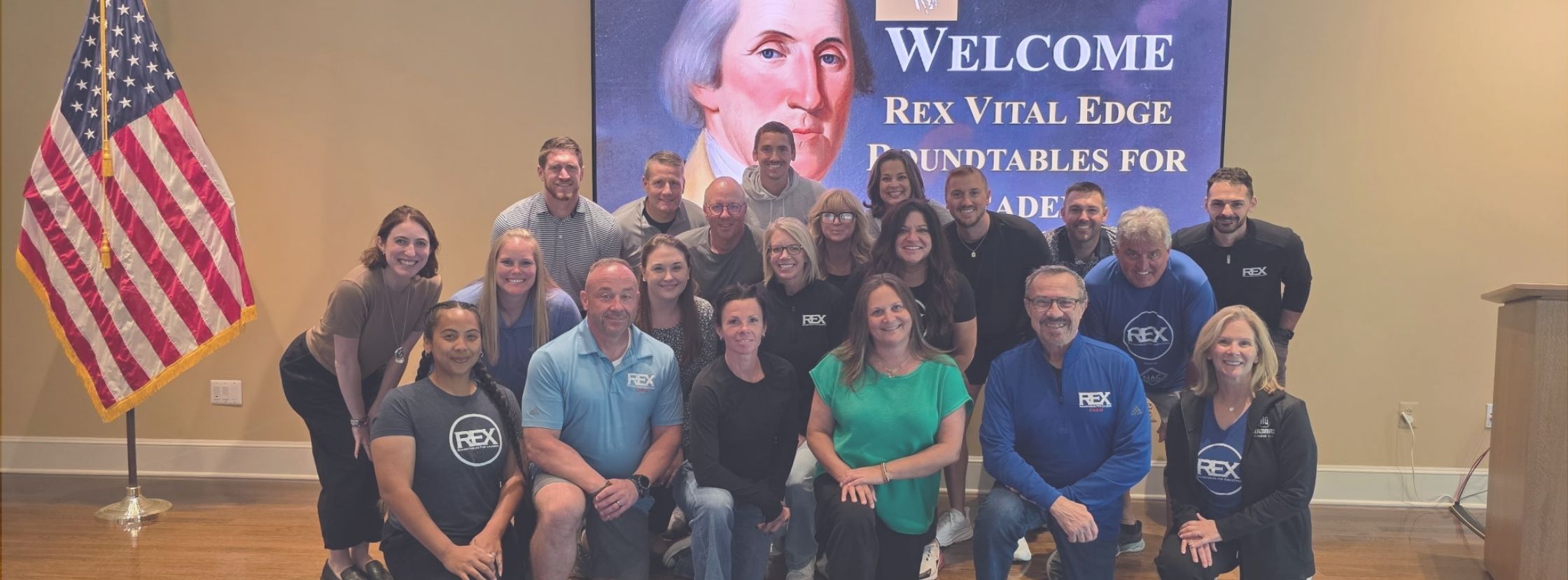
Last week, we had the opportunity to join REX Roundtables and their members for a day at the George Washington Leadership Institute. Over the course of the day, our team challenged ourselves to draw parallels from the more abstract leadership lessons to the very real, tactile tools in our platform — and how they can bring the abstract to life.
A fun challenge, because the fitness industry presents a truly unique leadership problem. Your team is likely part-time, async, spread across shifts, locations, and generations. The qualities that define great leadership — accountability, transparency, consistency, trust — are easy to talk about and hard to actually exemplify and put into practice.
This article is our guide to bridge that gap. Here are the biggest takeaways from the day and exactly how to operationalize them in NetGym.
1. Communication Is Leadership Operationalized
This was the quote that stopped us cold.. and honestly, we wish we had come up with it ourselves. 😉
And then, to really drive home both the importance and the challenge: “The single biggest problem in communication is the illusion that it has taken place.” — George Bernard Shaw
Communication in a fitness business can feel scattered, reactive, fragile, and lacking intention. You rarely get to speak to your team as a whole. There are no set shifts where everyone overlaps and you can run a shift prep meeting the way top hospitality brands like the Ritz-Carlton do. You send a Slack message and it gets buried. You have a conversation at the front desk and it never reaches the people who actually needed to hear it. And if communication is leadership operationalized — scattered communication means scattered leadership.
NetGym naturally systemizes your communication but here are a few specific ways to take it to the next level:
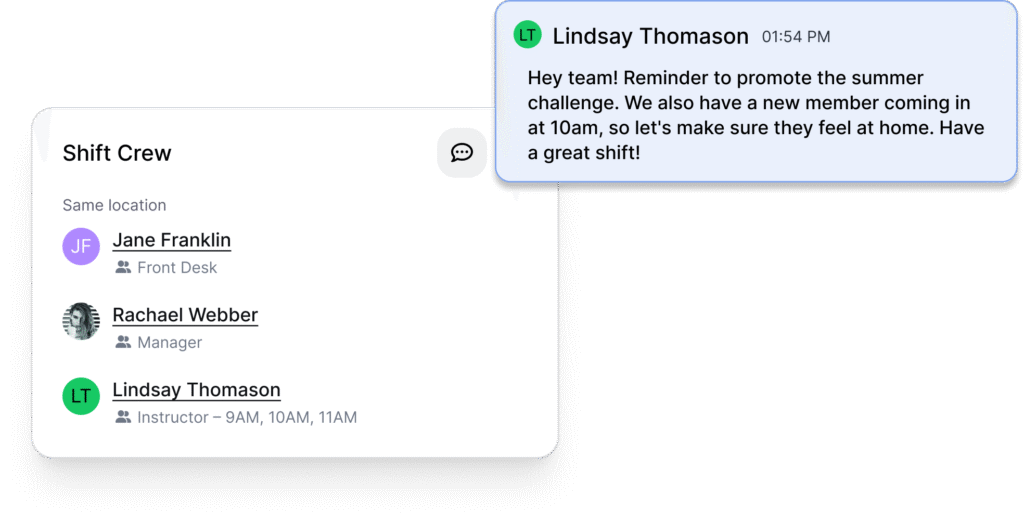
- Pre-shift Alignment: Hospitality brands like the Ritz-Carlton run pre-shift meetings to get their team aligned for the day. Most fitness businesses can’t do that — your team doesn’t all start at the same time and you’re rarely all in one place. Our built in Shift Crew solves for that. With Shift Crew, everyone working within a shift window is connected in-app — front desk, managers, instructors, cafe workers, whoever you want. Make it a checklist item for your most senior person in that crew to send a quick aligning message to the group at the start of their day or the start of that “block” of shifts. Something as simple as: “Hey team — reminder to promote the summer challenge and that our focus this quarter is member personalization. We have a new member coming in at 10am, so let’s make sure they feel at home.” Small, consistent, intentional, bonding.
- Plan Your Touchpoints: The Shaw quote probably punched us all in the gut for a reason. When we think about marketing to our clients, we know something needs seven to nine touchpoints across channels before it lands. Communicating with your team is no different. If there’s something important you want to communicate to your team, plan your touchpoints from the start: introduce it in a team meeting, bake it into your upcoming 1:1 agendas, schedule a compliance post in NetGym, send a survey two weeks later, bring it up in team channels, share a document that needs a sign-off. Repetition with intention is not redundancy — it’s how to actually land communication.
2. Fairness Is a Foundation, Not a Feeling
Another theme of the day was around fairness and how the perception of fairness is just as important as fairness itself.
We all want to be fair across our team. But when team members catch you at different points in your day, with different energy levels and different amounts of patience left in the tank, consistency can be hard to maintain. Someone asks you to bend a policy when you’re in a great mood: “No problem, I’ve got you.” Someone else asks after you’ve already handled five fires: “Haven’t you read the employee handbook?” You’re human after all. But when policies are enforced based on your mood or which manager they speak to rather than principle, trust erodes fast.
The answer isn’t to care more about fairness or to try to become a robot. The answer is to systemize it.
Again, NetGym does this naturally but here are a few things to double check and take it to the next level:
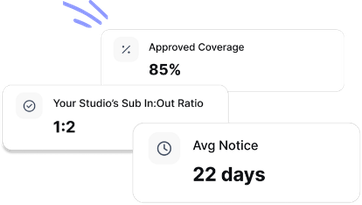
- Document Policies: Make sure your subbing and time-off policies are documented in your resources, signed off by employees, and built into NetGym’s subbing and time-off settings. That means the system holds to policy and flags requests that fall outside of it — so you don’t have to be the bad guy. The system simply won’t allow it.
- Rely on Data, Not Gut: When attendance, task completion, shift coverage, engagement, etc. are tracked in one place, you stop making judgment calls in employee reviews from memory and gut and start making them from information your whole team can see. That transparency is what makes fairness feel real — not just claimed.
3. Inspiration Is a Leadership Practice, Not a Personality Trait
One of the most honest moments of the day was the acknowledgment that inspiration is hard to sustain — especially when you’re stretched thin, putting out fires, and running on empty. And yet your team still needs it.
The suggestion here isn’t to try harder or fake it. It’s to build inspiration into the system so it shows up even when you’re struggling:
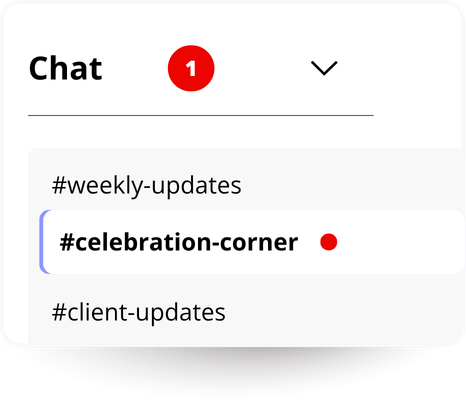
- Give It A Channel: Create a channel in NetGym called Celebration Corner — or whatever fits your culture — and make recognition a consistent, structured habit rather than something that only happens when you remember or when something goes wrong. The Ritz-Carlton runs a program called First Class Fridays: a weekly tradition where management honors a team member for exceptional care. Make it part of your weekly routine to find one person to recognize for going above and beyond. The key to meaningful recognition is specificity and a clear connection back to your values — not just “great job” but why it mattered.
- Schedule For Future You: On the days when you feel particularly inspired — lean in. Write out a month’s worth of encouraging messages or team wins and schedule them out. Inspiration doesn’t have to be spontaneous and recognition doesn’t have to be immediate. It just has to be real.
4. Collaboration Is a Force Multiplier But It Requires Structure
The session made a point that stuck: collaboration is the great force multiplier of effective organizations. But it requires civility, patience, and the willingness to actually delegate.
In a studio or gym with a part-time, async team, collaboration doesn’t happen naturally. It has to be built. And yes — it can feel easier to just make all the decisions yourself. But easier is not the same as effective. So:
- Lean On Surveys: Pull your team into decisions before they’re made, large and small. Washington himself consistently sought counsel from his staff before acting. It doesn’t have to be high-stakes: which name do you like better for the next promo? What piece of equipment do you wish we had? You don’t always have to act on the majority, but making your team feel involved in what you’re building creates culture and shared ownership. For something less formal than a survey, open a channel for specific initiatives — share what you’re working on and invite input on the pieces you’re ready to open up.
- Formalize Tasks: Delegate and collaborate with your team with clarity so that “I’ll handle it” has a name, a deadline, and a visible outcome attached to it. Collaboration isn’t about everyone being in the room at the same time. It’s about everyone knowing their role and having a clear way to understand how they can contribute.
⚡Extra Pro Tip:
Use surveys once or twice a year to find out what other strengths your team has or where they want to grow. Someone interested in becoming your social media coordinator? Now you know who to bring in for collaboration — and you’ve just created a development opportunity in the process.
5. Be Smart With Your Time And Free Up More of It
The session touched on the idea of time affluence: strategic leaders protect their time and elevate the people around them by delegating the work that doesn’t require their specific judgment. One line from the day that applies directly: be present, be engaged — and you simply cannot do that if you’re buried in tasks that someone else or something else could own.
Yet again, NetGym naturally frees up a chunk of your time from logistics and allows you to lead with more freedom, but let’s double down:
- Create a Delegation Framework: Start with our Time-Saving Blueprint — a resource built specifically for fitness operators who want to audit their time and redirect it toward work that actually moves the business forward.
- Delegate Clearly: Revisit the Tasks section above and commit to delegating. Having visibility into what’s been assigned and where things stand makes it easier to let go — because you’re not letting go into a void.
6. Culture Alignment for a Disjointed Team
A theme that surfaced across the open group conversation was the challenge of aligning an async, part-time team around a singular mission and shared culture. It starts with a simple but important question: is your culture actually documented?
Do you have your mission, vision, and values written down in a place your team can continually reference? Do you have a customer service manual that shows your team how your values get brought to life in practice? If not, start there. Document it and then schedule recurring reminders throughout the year to bring your team back to it. And remember:
- Let Your Documents Grow: These are living documents. You can update them over time and alert your team to new additions. Don’t forget, culture at its core is shared norms, shared language, and shared behaviors — so don’t second-guess putting definitions to the things that matter most to your brand. One member in the group shared that they worry when a team member says they “communicated” something to a member, because to them that might mean sending one email. So define it. What does communication mean at your studio? Does it mean receiving an acknowledgment back? Does it mean seven touchpoints before you can say you tried? Put it on paper.
- Don’t Build Resources In A Silo: In case the idea of creating these documents feels overwhelming, loop back to the collaboration note! Your team can actually help create these documents. Involving them in defining your culture makes it theirs too and builds collaboration in as a cultural cornerstone.
7. Build Systems That Outlast You
This tends to be another gut punch and brought us back to a quote from Frances Frei who said it best: “If things fall apart when you walk away, you were a great doer. Not a great leader.”
The goal of leadership isn’t to be indispensable. It’s to build something strong enough to run without you — a team with the right skills and resources available to them, a defined culture, and systems that hold everything together when you’re not in the room.
Every workflow you build in NetGym — every recurring task, every scheduled communication, every shift structure — is a layer of infrastructure that runs without you having to touch it. The goal isn’t automation for its own sake. It’s intentionally scaling your leadership. It’s building something that outlasts you.
We left the George Washington Leadership Institute more convinced than ever that the gap between great leadership and scattered leadership is a systems problem. And systems problems have solutions.
Operationalize Your Leadership
NetGym is built for exactly this — turning the leadership qualities you already value into systems your whole team can see and feel.